Table of Contents (11 sections)
As we step into 2026, the realm of future smartphone technology is becoming a captivating blend of advanced features and user-centric designs. Featuring innovations that elevate user experience and functionality, smartphones are evolving at a remarkable pace. Let’s explore some of the most significant trends that are poised to shape the future of this technology.
1. Foldable and Rollable Displays
The advent of foldable and rollable displays has transformed how users interact with their devices. Manufacturers are increasingly investing in flexible OLED technology, which allows screens to bend and rotate, offering more screen real estate without increasing overall dimensions. A report by Display Supply Chain Consultants (DSCC) indicates that the global market for foldable smartphones could surpass 50 million units by 2027, a significant leap from current figures.
The importance of this innovation lies in the versatility it offers users. Imagine a device that can be flat like a tablet, yet folds neatly to fit in your pocket. Furthermore, companies like Samsung and LG are striving for enhanced durability, ensuring that these devices are both practical and stylish. Users are showing demand for such advances, as evidenced by rising sales figures across multiple regions. The trend towards foldable technology not only caters to aesthetic preferences but also enhances productivity, allowing for multitasking and immersive experiences.
2. Enhanced AI Integration
Artificial Intelligence (AI) is rapidly becoming a cornerstone of smartphone technology. From enhanced voice recognition to advanced camera functionalities, AI is optimizing user experience by making devices smarter. For instance, AI-powered cameras can analyze scenes and adjust settings automatically, producing stunning photos even in challenging environments.
According to Statista, the AI in smartphones market is expected to reach nearly $40 billion by 2026, driven by user demands for intuitive interfaces and personalized experiences. This includes features like adaptive battery management, which learns your usage patterns to extend battery life, and smart assistants that can predict needs before they arise. Current AI models are continuously improving their understanding of user preferences through data analysis, making smartphones even more user-friendly.
3. Sustainability Efforts
With rising awareness of environmental issues, the smartphone industry is responding to the demand for sustainable practices. Innovations in this sector focus on creating devices that are not only energy-efficient but also made from recyclable materials. Companies like Apple have announced plans to develop smartphones that are 100% carbon neutral by 2030, aiming to lead by example in eco-friendly production processes.
According to the International Energy Agency, smartphones account for a substantial percentage of global electronic waste. Thus, the future lies in circular production models, wherein devices are easily recyclable and less damaging to the environment. Sustainability is no longer just a trend but a necessity, influencing consumer purchasing decisions and corporate strategies. The transition to eco-friendly manufacturing processes symbolizes a collective shift toward preserving our planet for future generations.
4. 5G Connectivity and Beyond
As 5G networks expand globally, the integration of ultra-fast connectivity into smartphones has already begun to change user experiences. Users enjoy seamless streaming, faster downloads, and improved online gaming experiences. Nokia's research suggests that 5G technology could revolutionize mobile connectivity, leading to an estimated 1.4 billion 5G connections by 2026.
The implementation of 5G also opens doors for Augmented Reality (AR) and Virtual Reality (VR) applications, each providing immersive experiences that were previously impossible. This impacts sectors ranging from gaming to education and remote work. As network infrastructure improves, we anticipate even broader applications across various industries, bolstering productivity and user engagement.
5. Biometric Advancements
The advancement of biometric technology is poised to enhance security features in smartphones. The latest trends reveal innovations such as under-display fingerprint scanners and facial recognition systems that function accurately under various lighting conditions. According to MarketsandMarkets, the global biometrics market is projected to reach $59 billion by 2025, indicating significant investments in enhancing security measures.
A higher level of security assures users that their personal and financial data remain protected. Additionally, biometric authentication can simplify the user experience by allowing quick and secure access without remembering multiple passwords. As devices become increasingly integrated into our daily lives, these innovations will become crucial for maintaining privacy and security in a digital world.
📺 Ressource Vidéo
> 📺 To go further: Discover the latest trends in smartphone technology for 2026. Search for: future smartphone technology 2026.
Checklist avant achat
- [ ] Check for foldable display technology.
- [ ] Ensure the phone has AI-powered features.
- [ ] Look for sustainability certifications.
- [ ] Confirm 5G capability.
- [ ] Verify biometric security options.
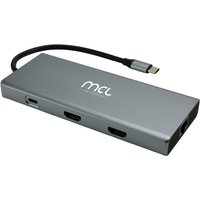
MCL 10-PORT DOCKING STATION HDMI station d'accueil Tablette/Smartphone/ordinateur portable Noir, Gris
Topbiz FR


Glossaire
| Terme | Définition |
|---|---|
| AI | Système informatique capable d'apprendre et d'effectuer des tâches normalement réservées à l'humain. |
| 5G | Cinquième génération de technologie mobile, offrant une connectivité rapide et fiable. |
| Sustainable Technology | Technologie conçue pour minimiser l'impact environnemental et utiliser des ressources renouvelables. |
- Qu'est-ce qu'un smartphone pliable ?
Un smartphone pliable possède un écran flexible qui peut se plier ou rouler, augmentant ainsi sa surface d'affichage sans augmenter ses dimensions.
- Comment l'IA améliore-t-elle l'expérience utilisateur ?
L'IA optimise les fonctionnalités des smartphones, telles que la gestion de l'énergie, le traitement photo et les assistants vocaux, offrant des solutions personnalisées.
- Pourquoi la durabilité est-elle importante dans la technologie smartphone ?
La durabilité est essentielle pour réduire l'impact environnemental, limitant les déchets électroniques et promouvant un usage responsable des ressources.
- Quel impact le 5G aura-t-il sur les smartphones ?
Le 5G permettra une connectivité plus rapide, facilitant l'utilisation d'applications AR et VR, ainsi que des services de streaming de haute qualité.
- MCL 10-PORT DOCKING STATION HDMI: This docking station is a versatile addition for those who need to connect multiple devices seamlessly.
- Smartphone Yonis noir: A robust smartphone designed for demanding users, offering durability and enhanced water resistance, perfect for everyday use.
- Etui Smartphone KITRIE: This stylish case adds protection to devices while keeping a modern look, ideal for new smartphone models.
📺 Pour aller plus loin : future smartphone technology 2026 sur YouTube
Recommended products
Selected by our experts
MCL 10-PORT DOCKING STATION HDMI station d'accueil Tablette/Smartphone/ordinateur portable Noir, Gris
Topbiz FR
This docking station is a versatile addition for those who need to connect multiple devices seamlessly.
Smartphone Yonis noir 5.7 RAM 2 Go stockage 128 Go
Darty FR
A robust smartphone designed for demanding users, offering durability and enhanced water resistance, perfect for everyday use.
Etui Smartphone KITRIE Marron en cuir
3 Suisses FR
This stylish case adds protection to devices while keeping a modern look, ideal for new smartphone models.